

When Can I Start Wearing a Breast Prosthesis? A Healing-First Guide to Timing & Fitting
There is no single post-surgery week when everyone should start wearing a breast prosthesis. Healing varies according to the type of surgery, wound healing, swelling, skin sensitivity and whether you are having other treatment.
A lightweight temporary breast form—often called a softie or comfie—may be offered during the earlier healing period because it is soft and light. A longer-term breast prosthesis is generally fitted later, when the surgical area has healed sufficiently and swelling is more settled.
Your breast care team and prosthesis fitter are the best people to tell you when your body is ready. Treat general timelines as background information, not as a personal deadline.
Healing first → fitting second. The aim is not to start wearing a longer-term prosthesis as quickly as possible. It is to wait until fitting can be comfortable and meaningful for your current body.
A recovery timeline without fixed medical deadlines
Instead of counting days on a calendar, it can be more useful to think in stages. You may move through these stages faster or more slowly than someone else.
What is a temporary breast form?
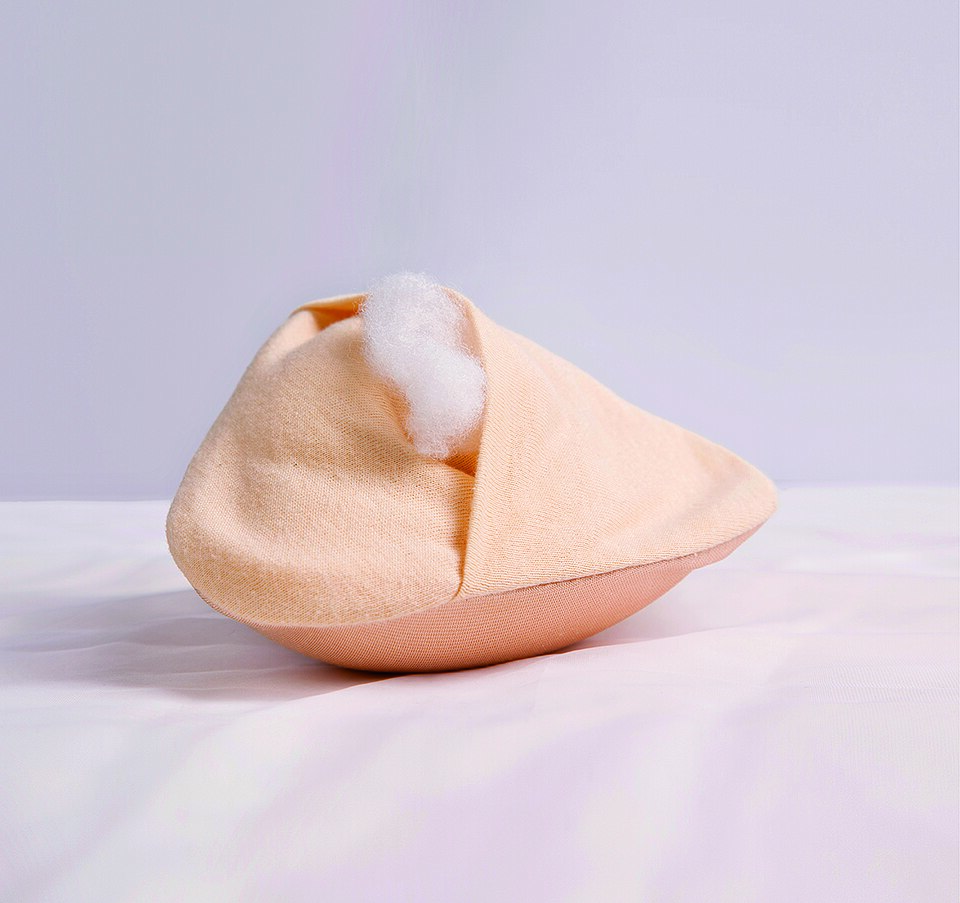
A temporary breast prosthesis is usually a lightweight fabric-covered form used during the earlier part of recovery. You may also hear it called a softie, comfie or temporary breast form.
Because it is soft and light, it places less weight against a healing area than many longer-term silicone forms. Some people use one inside a soft bra; others do not want to wear a breast form at this stage—or at all.
If you are new to the terminology, read what a breast prosthesis is first.
Temporary soft form vs longer-term prosthesis
The difference is not that one is “real” and the other is not. They are simply designed for different needs and stages.
Temporary soft form
Usually lightweight and fabric-covered. It can provide some shape under clothing without the weight of a typical silicone prosthesis.
It may also be adjustable depending on the design.
Longer-term prosthesis
Often made from silicone and available in different shapes, sizes, profiles and weights.
It is normally selected through a more considered fitting process once your shape is stable enough to assess comfortably.
When should I get fitted for a longer-term breast prosthesis?
There is no date that applies equally to everyone. A fitter needs to work with the body you have at the appointment, so fitting too early—while swelling or shape is still changing—may make it harder to judge size and comfort.
Patient information from major breast-cancer organisations often describes permanent prosthesis fitting after the wound has healed and swelling has settled. Some resources give typical time ranges, but those ranges are examples rather than guarantees for an individual person.
Radiotherapy, reconstruction, wound healing and ongoing swelling may also affect when fitting makes sense. Your own care team can take those factors into account in a way a general online timetable cannot.
What should feel settled before a fitting?
You do not need to diagnose your own healing. Instead, use these questions as prompts for a conversation with your breast care team or fitter.
- Your wound is healing and they are satisfied with its progress
- Swelling is becoming more stable rather than changing noticeably day to day
- The area can tolerate the bra or clothing needed for a fitting
- Skin sensitivity is manageable enough to try forms comfortably
- Any radiotherapy-related skin or swelling changes have been considered
- You feel ready to explore a longer-term form—if you want one
If you are preparing for an appointment, continue to what to expect at a breast prosthesis fitting .
What if I still have swelling or tenderness?
That is a reason to ask your care team before rushing into a longer-term fitting.
Swelling can affect the shape you are trying to match, while tenderness or sensitive skin may make a heavier form uncomfortable. If the surgical area is still changing, a softer temporary option—or simply waiting—may make more sense.
If you notice new or worsening wound concerns, unexpected swelling, increasing pain or another change that worries you, contact your healthcare team rather than using prosthesis fitting as a way to work around the problem.
Do I have to move from a softie to a silicone prosthesis?
No.
Some people prefer a longer-term silicone breast form because of its weight, movement or appearance under clothing. Others remain happy with a lightweight form. Some wear a prosthesis only occasionally, and some choose not to wear one.
A fitting appointment gives you options; it does not create an obligation to choose a particular form.
Don't rush because you feel you are “behind”.
Recovery is not a race toward a permanent breast form. A later fitting does not mean you are recovering incorrectly, and an earlier fitting is not automatically better. The useful time is when your body, care plan and personal preference make fitting appropriate.
How should the prosthesis and bra work together?
Once you are ready to try a longer-term breast form, the prosthesis should be assessed together with the bra and clothing you expect to wear. It should feel comfortable and remain reasonably stable during normal movement.
A pocketed bra may be useful, but it is not always required. A suitable full-cup bra can also work with some breast forms.
For fit guidance, read our post-mastectomy fitting guide .
FAQ: When can I start wearing a breast prosthesis?
How soon after mastectomy can I wear a breast form?
A lightweight temporary soft form may be offered during the earlier healing period and can be used when it feels comfortable and your care team is happy for you to do so. A longer-term prosthesis is usually considered later, after healing and swelling have progressed sufficiently.
Is there a fixed number of weeks before I can get a breast prosthesis?
No single timeline applies to everyone. General patient guides may describe typical time ranges, but your wound healing, swelling, treatment and care team's advice are more important than reaching a particular week.
What is a softie breast form?
A softie is a lightweight temporary breast prosthesis, usually fabric-covered and softly filled. It is often used while the chest is healing or while the wearer is deciding whether they want a longer-term form.
When should I book a permanent breast prosthesis fitting?
Ask your breast care team when your wound, swelling and skin are sufficiently settled for fitting. They can also account for treatments such as radiotherapy that may affect timing.
Can I keep wearing a lightweight breast form long term?
Some people do. You do not have to change to a heavier silicone prosthesis simply because a longer-term fitting becomes available. Comfort and personal preference matter.
Do I have to wear a breast prosthesis at all?
No. Wearing a breast prosthesis is a personal choice. You may wear one every day, only with certain clothing, use a lightweight form or choose not to wear one.